
How we work
System-first thinking
Marketing improves when the journey is designed as a connected system, not a set of isolated tasks.
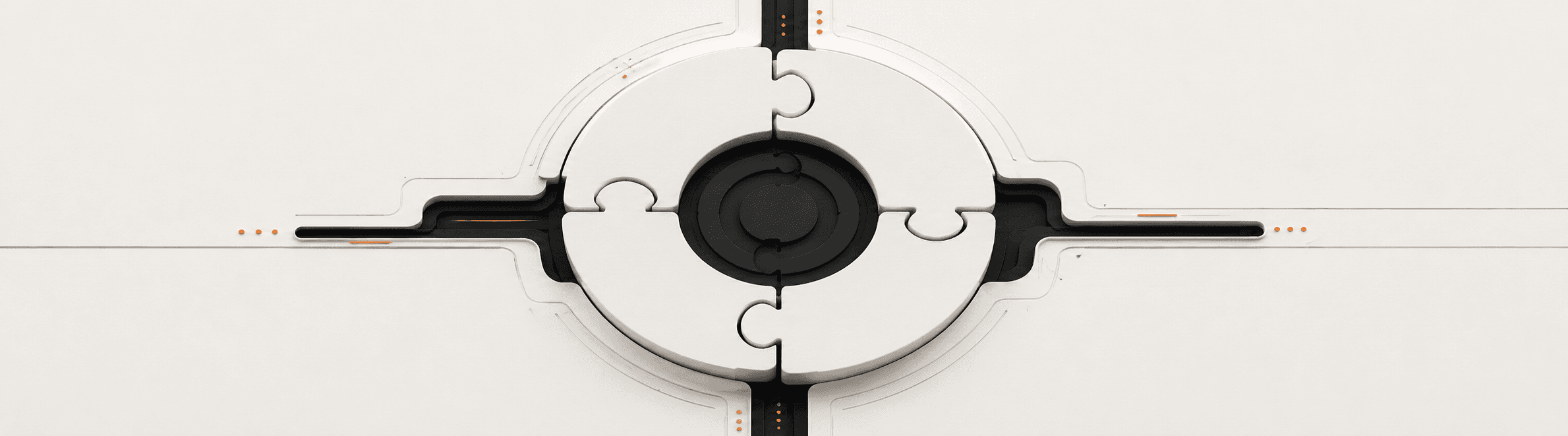
Most marketing problems do not live in one channel. They appear in the gaps: between an ad and the landing page, between an event and its follow-up, between a good conversation and the information needed to make a decision. We begin by looking at those connections.
01
Start with the movement you need
Before choosing deliverables, we define the movement the business needs: stronger recall, a clearer offer, qualified enquiries, venue footfall or a better way to carry an event forward. That gives the work a shared direction.
A website, campaign or content plan is then judged by its contribution to that movement, not by whether it looks busy in isolation.
02
Map the handoffs
We look at where people enter the story, what they need next and who follows through. That can include paid media, social, search, a landing page, sales conversations and on-ground activity.
The result is a practical map of dependencies, so teams know what needs to be ready before attention arrives.
03
Make improvement easier
A system is useful because it can be observed and improved. Once the handoffs are visible, the team can see where interest drops, where proof is missing and where a small change might create more momentum.
That is a more productive starting point than continually replacing individual assets.
The principle
- Define the business movement first.
- Design the handoffs between channels.
- Use the system to guide improvement.